Cart is empty

CULTURE READS
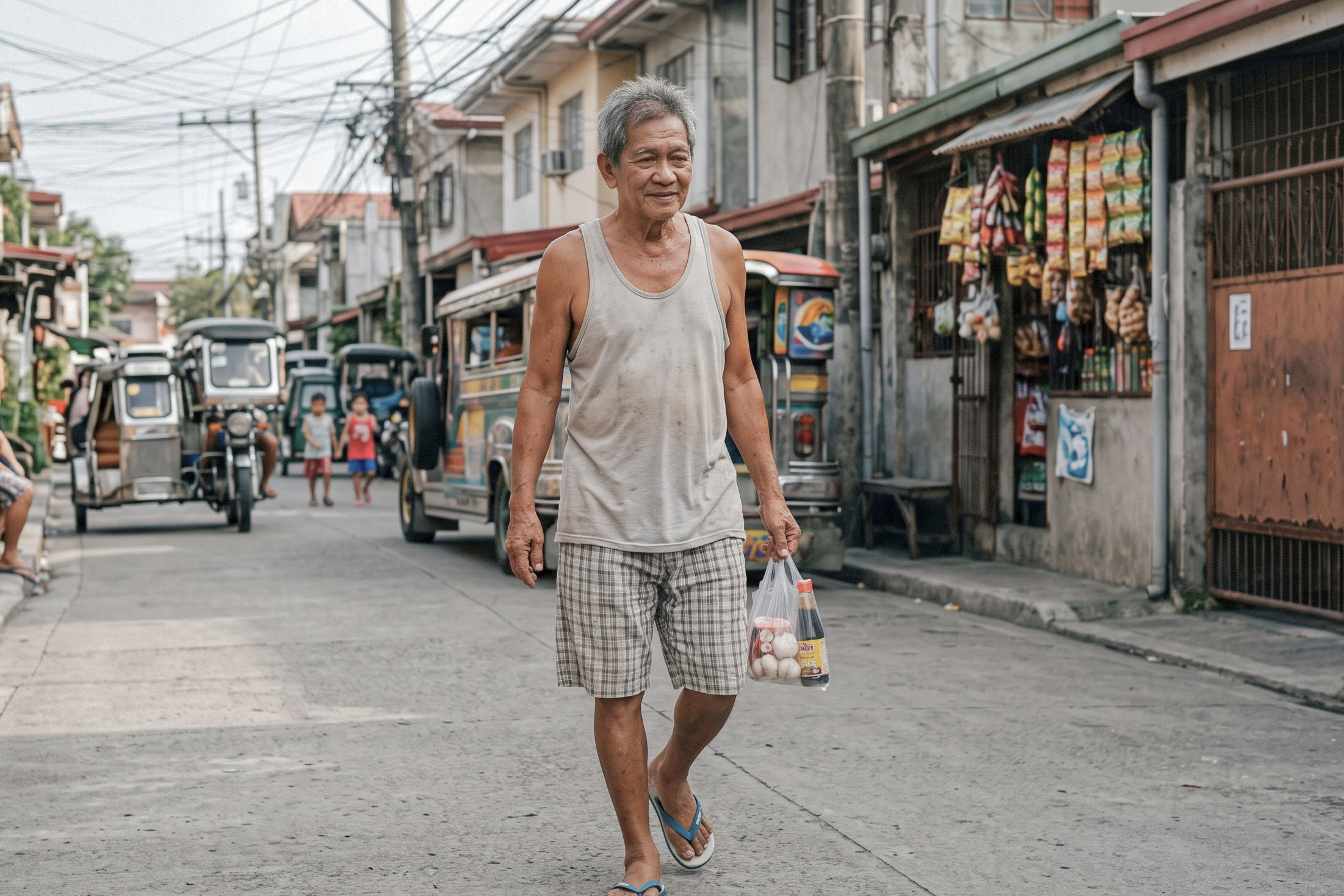
The Trade-Off: Growing Old in the Philippines
Categorizing retirement in the Philippines as either a peaceful stage of life surrounded by family or a lonely decline defined by illness and dependence oversimplifies a far more complex reality. Studies and demographic data point to a range of experiences shaped by health, finances, family structures, and access to support.
A 2013 qualitative study on perceptions toward aging among selected Filipino adults
found that Filipino participants relate aging to maturity, productivity, autonomy, and positive life experiences, but also to physical decline, apprehension, and responsibility. These contradictions remain relevant a decade later.
The Philippines is also becoming older. According to the Philippine Statistics Authority's 2024 Census of Population,
11.42 million Filipinos were aged 60 and above in 2024, representing 10.2% of the household population. That was up from 8.5% in 2020. The country's median age also rose from 25.3 in 2020 to 27.7 in 2024.
DATEOctober 22, 2026
AUTHORANGELA CLARE AGPAWA
READ5 Min

The reality of growing old in the Philippines
Unlike in the majority of societies worldwide, where moving into a retirement community or assisted-living facility is a conventional stage of later life, Filipino families continue to see care for older relatives as a family responsibility. Parents live with their children, grandchildren grow up in the same household as grandparents, and relatives living nearby can become part of an informal support system.
Related: Two sides of the family-oriented culture in the Philippines
A nationally representative study using data from the Longitudinal Study of Ageing and Health in the Philippines found that living alone, weaker social involvement, and less frequent contact with friends were associated with greater loneliness among Filipino adults aged 60 and above. The study also found that poorer perceived financial circumstances were associated with higher loneliness.
This implies practical consequences of family and community for an older person’s social life. However, family reliance also comes with another side.
The Philippine Institute for Development Studies' 2026 research on the future demand for care describes the country's care landscape as having limited access to care services, an underdeveloped care industry, shortages of qualified care workers, and unevenly distributed facilities. The research also points to the country's family-oriented culture as a major factor in how care is provided.
Family as the care system became normalized because the formal care system is not yet large enough to carry the entire load.
Family as financial support
For workers covered by the Social Security System, the government began a three-year pension reform in September 2025. Retirement and disability pensioners received a 10% increase in 2025, another 10% in 2026, and another 10% in 2027. SSS says the reform will eventually raise these pensions by approximately 33% over the three years and affect more than 3.8 million pensioners.The Department of Social Welfare and Development's Social Pension Program provides ₱1,000 per month to qualified indigent senior citizens. The program is specifically targeted at indigent seniors rather than being a universal pension for every Filipino aged 60 and above.
However, this is not identical for everyone. Retirement security depends heavily on a person's employment history, contributions, income, household circumstances, and access to social protection.
A 2026 PIDS policy note on old-age pensions points to persistent gaps in old-age income security, particularly because informal employment remains widespread and contributory pension coverage is limited.
This is how family becomes a major part of the financial picture. For some seniors, children are not only emotional companions, but also a financial support that covers groceries, utilities, medicines, transportation, or medical appointments.

Healthcare
The Philippines has expanded healthcare protection for older people. Filipino citizens aged 60 and above can qualify for PhilHealth coverage under the senior citizen category, where premiums are sourced from proceeds of the Sin Tax Law. In 2025, the government's Zero Balance Billing policy was also expanded to all PhilHealth members admitted to basic or ward-type accommodations in DOH-retained hospitals, subject to the program's conditions.However, factors outside insurance also exist. Distance from hospitals, transportation, availability of specialists, medication costs, chronic conditions, and the ability of relatives to accompany an older person can all affect the actual experience of receiving care.
The 2025 WHO report on unmet health and social care needs among older people in Southeast Asia highlights gaps in health and social care across the region, while Philippine research continues to identify access to healthcare as part of the broader challenges facing an aging population.
From an expat's perspective
The situation takes a different form from the perspective of foreigners who deliberately choose the Philippines for retirement.One example is Richard Collins, a widower from Michigan whose story was published in 2026 by Dateline Ibalon. Collins described his decision to move to Cebu after considering assisted living in the United States. He said that during his visits to Manila and Cebu, everyday interactions with strangers and neighbors gave him a sense of connection he feared losing in institutional retirement.

Collins particularly highlighted his location’s accessibility to nearby malls, stores, hospitals, and other establishments.
His story highlights the contrast between an older foreigner deliberately seeking out informal social interaction in the Philippines and a Filipino who has known such culture as so ordinary that it is barely recognized as a feature of aging.
There is also a financial contrast. Receiving income in U.S. dollars alleviates the experience of affording Philippine housing, food, transportation, and services significantly different from that of a Filipino retiree living on a local pension.
The Trade-Off
Growing old in the Philippines shows a distinct combination of social support and financial pressure. A significant source of care and assistance comes from the family, and community ties provide regular social contact and a warm bond that extends beyond the household. This shows how Filipino hospitality and family-oriented practices provide forms of companionship and practical support that are not always available in nursing homes or assisted living facilities. This makes it attractive for senior citizens who put more value on connection rather than living comfortably.However, these forms of support exist alongside limited financial resources. Pension coverage is not uniform and retirement income varies according to employment and contribution history. Moreover, the cost of healthcare and daily living continues to put pressure on older people and their families.
This creates varying retirement experiences considering different backgrounds, pensions, and savings—let alone differences in nationalities where earned income comes in stronger currencies. The same housing, food, transportation, and social environment that is deemed easily and financially accessible to one can be incredibly difficult for another to sustain, especially for a Filipino relying on local retirement income.
The trade-off between cordiality and financial conditions, and the value of either, is subjective based on viewpoint, preferences, and priorities.

