Cart is empty

CULTURE READS
Two sides of the family-oriented culture in the Philippines
The family-oriented culture in the Philippines has existed for as long as anyone can remember. Aside from the everlasting resilience and hospitality the whole world credits Filipinos for, the emphasis on Filipino values comes about next in the ranks.
DATESeptember 25, 2026
AUTHORANGELA CLARE AGPAWA
READ5 Min

Two sides of the family-oriented culture in the Philippines
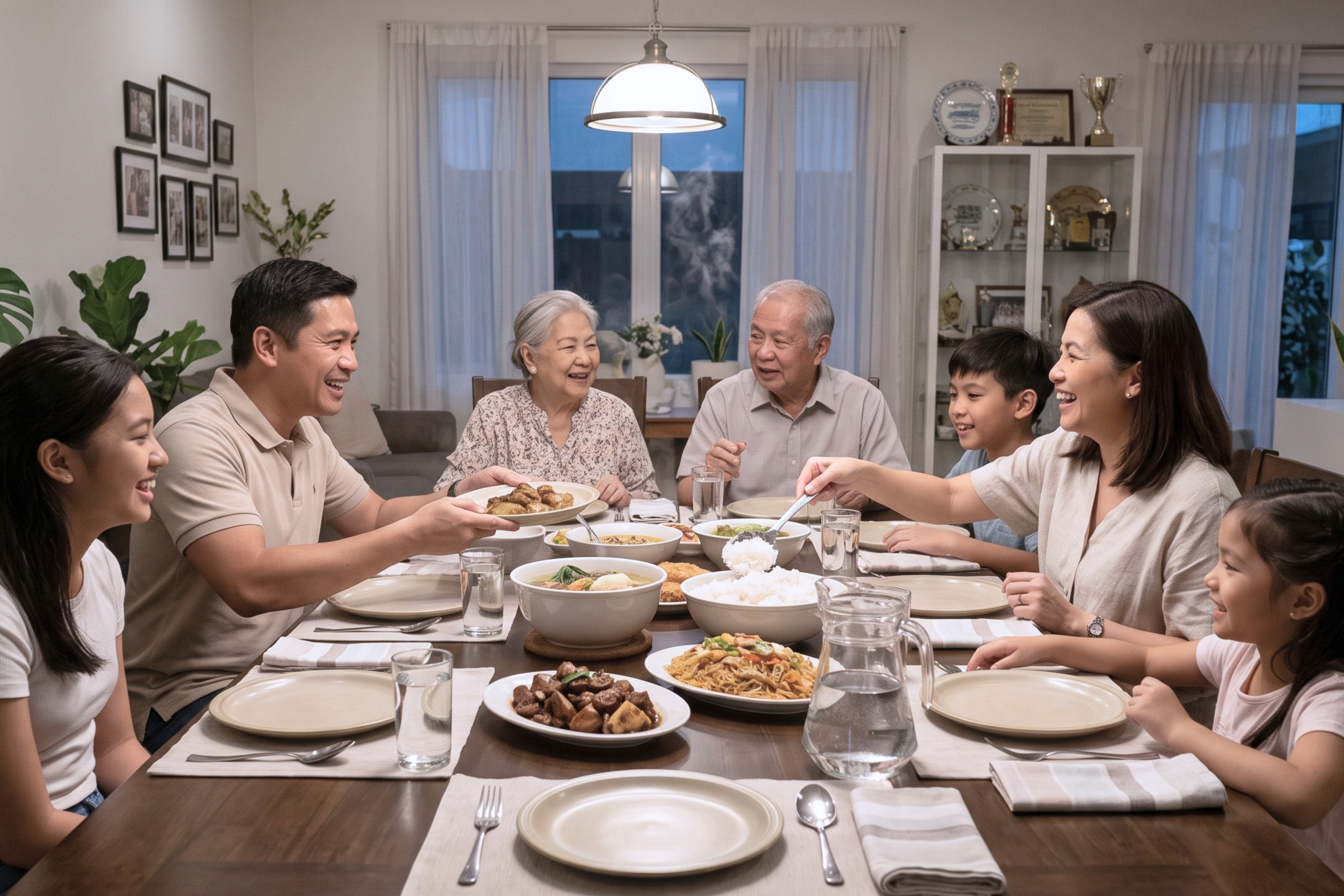
The term itself sounds unquestionably positive. Visualizing it produces images of families bonding, eating together, helping each other, and numerous other ways you may imagine a family in rainbows and sunshine, and having no one else’s but each other’s backs.
But the family-oriented culture in the Philippines is a way of life that only those who experience it firsthand understand. Moreover, there are certain levels at which the custom is lived—resulting in contrasting opinions among Filipinos.
Multigenerational Households
A typical household is usually thought to have only two sets of members: the parents and the children. In the Philippines, it is very common to see households where grandparents, great-grandparents, and even other relatives from both sides of the family live under the same roof.
The family-oriented culture in the Philippines was not forcefully imposed on Filipinos, but one that was born from the naturally ingrained loving and nurturing outlook toward family. This multigenerational cohabitation was a choice, only becoming a problem when participants have differing beliefs and values.
Many young adults nowadays are taking an interest in living independently; not to the extent found in Western culture where children are expected to move out at the age of 18, but at a time when they feel ready. Equating to having little to no time spent closely together with the family, the notion draws opposing opinions.
Believers of tradition, regardless of age, view this as a way of withdrawing from family bonds—deemed a selfish way of prioritizing one’s own needs and wants instead of sharing them with the family.
On the other hand, it is seen as a way of establishing boundaries—reinforcing the need for privacy and personal space for growth that otherwise would not be achieved in a household where even distant relatives live together.
Most importantly, more coffee does not equate to better. Some of the research suggests a nonlinear relationship, which means that the association does not improve simply because there is an additional cup.
An article by the Daily Tribune on family comfort through generational challenges presented both sides of the case. “This multi-generational living is not just rooted in a cultural tradition and socio-economic problem, hence this creates a support system where older generations foster a sense of security that they receive better care and attention within younger generations; this gives the older generation convenience that makes life more manageable for everyone involved.”
The article added, “The meaningful and practicality of multi-generational living can also build bumps that bound from sharing one space with multiple generations. Multi-generational households can create misunderstandings of the families perception, conflicts over household responsibilities, and outgrowing the members of the families.”
Filial Piety and Elderly Care
Filial piety is an extended aspect of multigenerational cohabitation—a deep moral duty of children to respect, care for, and support their parents and older members throughout their lives. Ideally, this maximizes every single second spent with the members and remaining together during the progressive stages of life. Moreover, this ensures quality care formed from familiarity and strengthened relationships.
This puts an expectation on children to take on the labor of taking care of their elderly alongside their personal responsibilities, such as school, work, or other activities. Doing the opposite means sending the member to a nursing home, which, aside from being costly and relatively unfit for the economic and financial problems existing in the country, also means lacking value for family.
Like every other form of family orientation in the Philippines, the take against elderly care is primarily rooted in emotions instead of realistic perspectives. The clear truth is that taking care of an elderly person, regardless of family or not, is physically and emotionally demanding. The existence of retirement homes alone is proof that it is work in itself, but this is a discussion that still surrounds.
Steph Arnaldo of Rappler expounds on all of this, explaining how Filipino family values have gone wrong and how they affect mental health, stating strong sentiments on the flaws found in Filipino family culture.
“Filipino family culture is definitely something to be proud of, but too much of any good thing can be bad,” Arnaldo stated.
Financial Support
The family-centeredness surrounding Filipino culture is not only evident in situations rooted in emotions—the tradition most often involves money, and many may think this is where things can get most complicated.In the country, it is a common tradition to give your very first paycheck to your parents. It is seen as a symbol of respect and gratitude for the hard work the parents have done until the child can enter the workforce. This is best described by the culture and phrase “utang na loob,” which translates to “debt of gratitude,” a reciprocal obligation or merely a feeling that one must return the kindness and sacrifices your parents made to feed and raise you well.
The intention is heartwarming, and a lot of Filipinos have never had a problem with the culture until it eventually turned into sustenance. Even Filipino children who have started living independently remain part of the financial picture of the family. They are expected to give a portion of their monthly income to their parents—sometimes even paying their entire rent and bills; some are paying for their younger siblings’ tuition fees. Even jokes about giving birth to children as a form of retirement have popularly circulated online due to high relatability.
It is objectively true that giving back to your parents and helping your family is an act of love and respect. In some cases, however, the transition to responsibility has made the whole family-oriented culture destructive instead.


