Cart is empty
CULTURE READS
This is how Nutrition Month is celebrated in the Philippines
The Philippines’ annual celebration of Nutrition Month stems from the country’s long-standing fight against malnutrition. While many nations commemorate nutrition as part of general health awareness days, Filipinos dedicate a full month to it. Declared through Presidential Decree No. 491 in 1974, Nutrition Month has since been a continuous campaign meant to alleviate the issue and others.
DATEJuly 01, 2026
AUTHORANGELA CLARE AGPAWA
READ05 Min

Philippine Nutrition Month: Themes, Celebrations, History
In schools, Nutrition Month is almost as anticipated as Foundation Day or Buwan ng Wika. Teachers hold cooking demonstrations and poster-making activities, not just to break monotony but to cultivate children’s understanding of what good food really means. Hospitals such as the Jose B. Lingad Memorial General Hospital go out of their way to turn their space into learning hubs for nutrition lectures and Zumba sessions. These are just some.
This time can often be seen as fun and leisurely, but the stark reality remains: millions of Filipino families struggle with food insecurity. A 2024 FAO report showed over 51 million Filipinos faced moderate or severe food insecurity between 2021 and 2023. UNICEF data revealed that stunting affects one in four Filipino children under five, while obesity is quickly rising, adding to the nation’s triple burden of malnutrition.
Such figures speak of systemic issues, but they’re also a reminder that change begins at the household level. Since 2024, the nutrition month campaign has held the overarching theme, Sa PPAN, Sama-Sama sa Nutrisyong Sapat Para sa Lahat, to highlight food and nutrition security as a right, not a privilege.
In 2026, the National Nutrition Council (NNC) Technical Committee, consisting of various bureaus, offices, and organizations, approved Nutrisyon at Kalikasan, Ating Pangalagaan! as the sub-theme.
2026 Nutrition Month Focus
The NNC stated that this year highlights the vital connection between nutrition and the environment, emphasizing that protection of natural resources is essential to ensuring sustainable food systems, food security, and good nutrition for present and future generations.
Climate change continues to affect food production across the world, as observed through riising temperatures, stronger typhoons, floods, droughts, and changing rainfall patterns that can reduce harvests and disrupt fisheries and make nutritious food harder to access.
According to the FAO, these environmental changes can threaten food security and limit access to fruits, vegetables, fish, and other nutrient-dense foods that support good health.
The theme also emphasizes the impact of food systems on the environment. The United Nations Nutrition initiative estimates that food systems account for roughly 30% of global greenhouse gas emissions, which highlights the need for more sustainable production and consumption practices.
Aligned with the Philippine Plan of Action for Nutrition (PPAN) 2023–2028, the campaign encourages climate-resilient agriculture, sustainable fisheries, reduced food waste, and support for locally produced seasonal foods. Through collective action, Filipinos can help strengthen food security, protect natural resources, and build food systems that nourish both current and future generations.
History of the Philippine Nutrition Month
The first-ever Nutrition Month celebration in the Philippines was observed in July 1974, following the issuance of Presidential Decree No. 491. According to the Department of the Interior and Local Government (DILG), the decree, known as the Nutrition Act of the Philippines, declared July as Nutrition Month to raise awareness about the importance of good nutrition among Filipinos. The National Nutrition Council (NNC), the country’s highest policymaking and coordinating body on nutrition, is assigned to lead and organize the annual campaign.
The goal of celebrating the Philippine Nutrition Month is not to promote temporary, month-long healthy diets among Filipinos—something you would forget the moment the calendar hits August. This consistency is an act of long-term advocacy for nutrition to encourage Filipinos to eat better, know how to eat good food while having a balanced diet, and even start healthy practices like local shopping, growing a garden, and eating seasonal produce.
The observance is interpreted and celebrated in various ways by schools, organizations, communities, and offices of different sectors.
How Filipinos Celebrate
The observance is interpreted and celebrated in various ways by schools, organizations, communities, and offices of different sectors.. The Jose B. Lingad Memorial General Hospital (JBLMGH) Public Health Unit, for example, celebrated the 50th Nutrition Month through a series of events for their employees—providing them with a nutritious breakfast, conducting a lecture on Nutritional Management for Non-Communicable Diseases, and engaging the audience in a cardio workout through Zumba exercises.
The event’s crowd favorite was the On-The-Spot Cooking Contest, which was designed for participants to come up with a nice and delicious dish using vegetables as main ingredients. This wasn’t only a fun, adrenaline-inducing activity but also allowed them to build their culinary skills.
This campaign didn’t leave retired personnel out; it has also hosted an informative lecture on Nutrition in the Elderly and gave them an opportunity to win exciting prizes by playing the fun Nutritional Roulette Game.

During the official kickoff of the 2025 Nutrition Month Celebration held on July 1, 2025, in Muntinlupa City, NNC-NCR Regional Nutrition Program Coordinator (RNPC) Milagros Federizo presented key messages as noted by the Philippine Information Agency (PIA):
• Every Filipino has the right to access affordable, safe, sufficient, and nutritious food.
• Support local farmers and food producers by buying locally grown produce.
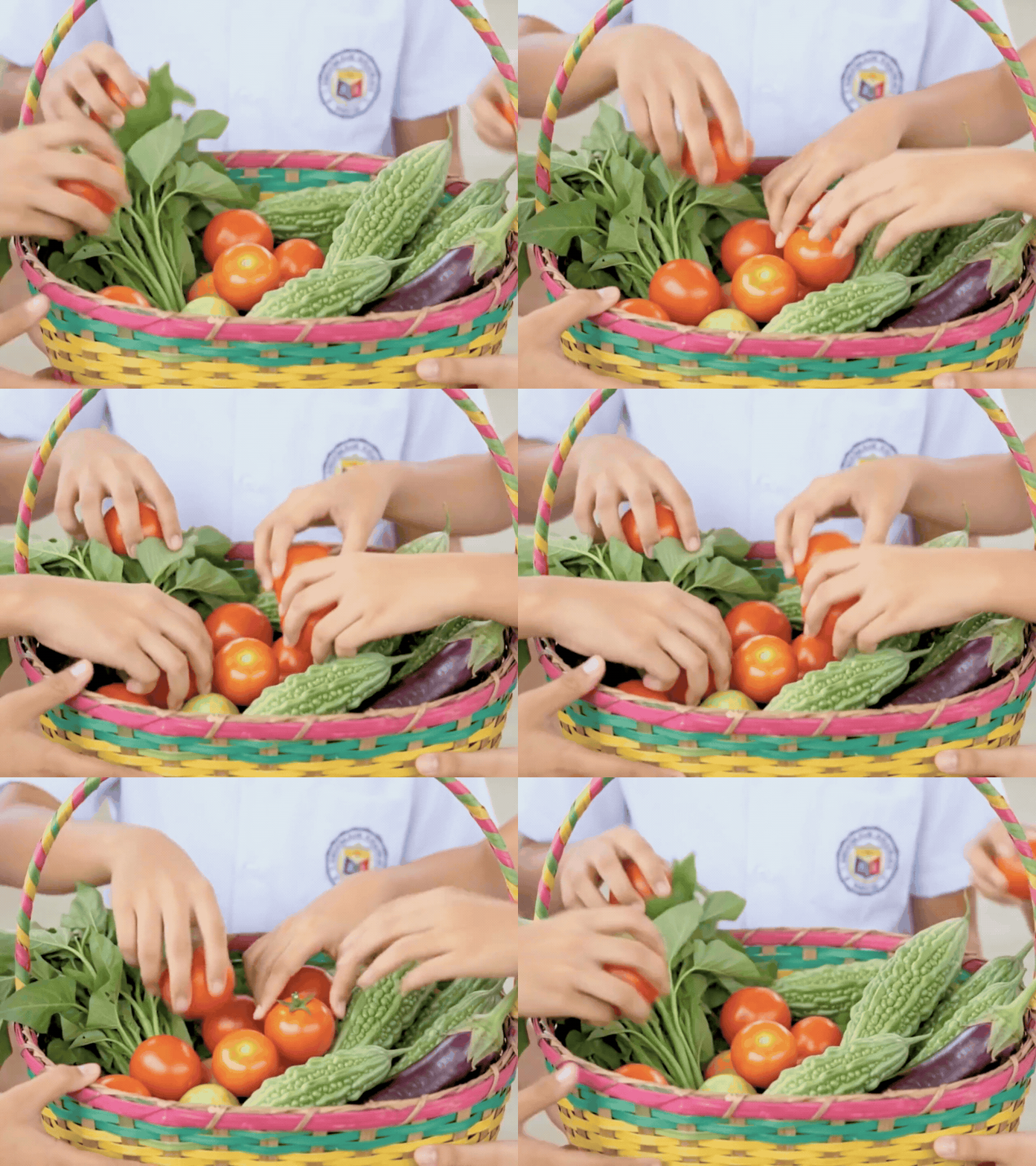
• Establish food gardens to supplement household food supply and create income opportunities.
• Reduce food waste through mindful consumption and proper storage.
• Promote a healthy diet starting from the first 1,000 days of life, including exclusive breastfeeding for the first six months, followed by continued breastfeeding up to two years and beyond with appropriate complementary feeding.
This theme and its agenda were a countermeasure to the 2024 findings by the Food and Agriculture Organization (FAO) which revealed moderate or severe food insecurity in 2021-2023 among 51 million Filipinos. This was also observed in the Social Weather Stations survey in December 2024, where it was reported that 25.9% of Filipino families experienced involuntary hunger.
These kinds of activities happen all over the Philippines every July, without fail. It’s a serious, consistent campaign meant to address the ever-present malnutrition problem in the country, as caused by poverty and economic disparities, and to extend to addressing all kinds of nutrition problems among Filipinos and promoting healthier living.
It is disheartening that such meaningful celebration roots in a sad reality, but it’s also worth rejoicing that Filipinos continue to find a way to resolve it.
Nutrition Month Activities
The good news is that the National Nutrition Council (NNC) isn’t alone in this endeavor. Organizations like UNICEF, establishments like the JBLMGH, and even executive political departments like the Department of Education (DepEd) are pushing for efforts in their own way, may it be through public encouragement, internal programs, or implementation of campaigns.

On June 23, 2025, the Department of Education (DepEd) released a memorandum that enjoins all learners, teaching and non-teaching personnel, officials, stakeholders, and parents to actively engage in the activities of the 2025 Nutrition Month Celebration.
It encourages nationwide celebration by implementing physical and online activities aligned with the objectives of the campaign, such as: ceremonies and flag-raising programs, conducting nutrition education sessions, holding poster-making and essay-writing contests, activities that highlight school, hosting cooking demonstrations that emphasize food safety, nutrition, and affordability, launching social media campaigns to highlight local nutrition initiatives, conducting Nutrition Month quiz bees, and several others. Similar activities are held every year in schools, like a tradition kept to remind the young of the importance of nutrition and healthy living.
Other, more generic activities are widely held across the Philippines. Education camps are organized where people may learn how to read nutrition labels and determine food quality on their own. Campaigns also encourage the food industry, including farmers, manufacturers, distributors, and food establishments, to include healthier food options. This raises awareness among industry professionals about maximizing organic and seasonal products and how to prepare food without harmful ingredients.
Health and Nutrition Issues in the Philippines
As previously mentioned, health and nutrition problems in the Philippines do not start or end with malnutrition; it has crawled its way to obesity, stunting, and micronutrient deficiency, all observed in all ages and genders.

According to 2024 data provided by UNICEF, stunting affects 26% of children below 5 years, and can result in poor cognition and educational performance and negatively affect outcomes later in life. There has also been a rapid increase in childhood overweight and obesity since 2003, during which the number has almost tripled and is now classified as “high” according to global standards. Micronutrient deficiencies, such as the lack of iron, iodine, and vitamin A, affect pregnant and lactating women and children.
Based on another one of their studies, the Philippines is one of the countries that accounts for 65% of the total number of children living in severe child food poverty or children consuming only two of eight defined food groups.
Support for PPAN 2023-2028
Recognizing the gravity of the problem, NNC and UNICEF have especially stood up and firmly encouraged everyone to support the Philippine Plan of Action for Nutrition (PPAN) 2023-2028 in 2024.
"Every child has the right to proper nutrition. When children are well-nourished, they can better learn, play, and engage in their communities, while also being more resilient in the face of illness and crises. Good nutrition is a fundamental driver of development and is essential for nation-building,"said UNICEF Philippines Representative Oyunsaikhan Dendevnorov.
The PPAN 2023-2028 is the 11th in a series of PPAN documents formulated by the National Nutrition Council (NNC) since 1974. It focuses on improving nutrition through healthier diets, better nutrition practices, and increased access to quality nutrition services. The plan also addresses the "triple burden" of malnutrition, which includes undernutrition, overnutrition, and micronutrient deficiencies.
For more reads on culture, subscribe to Our Market.

